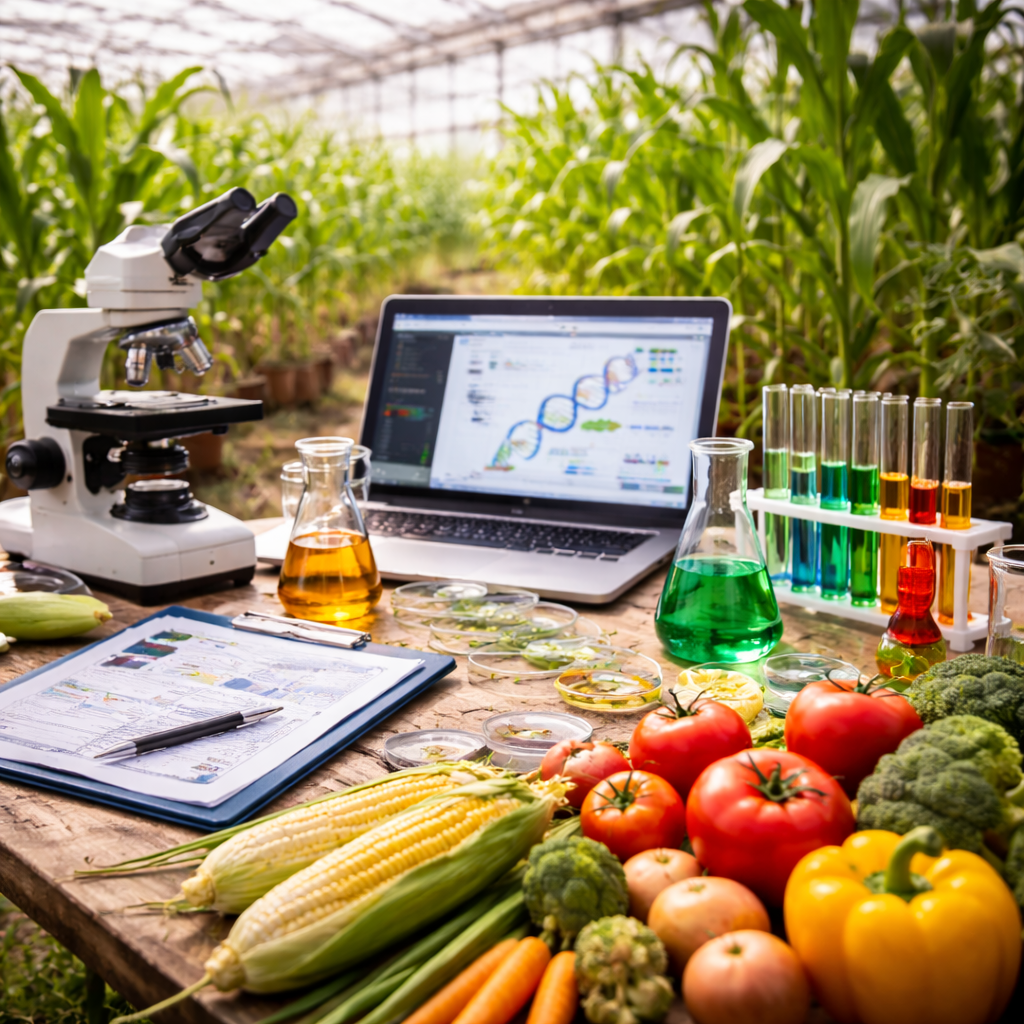
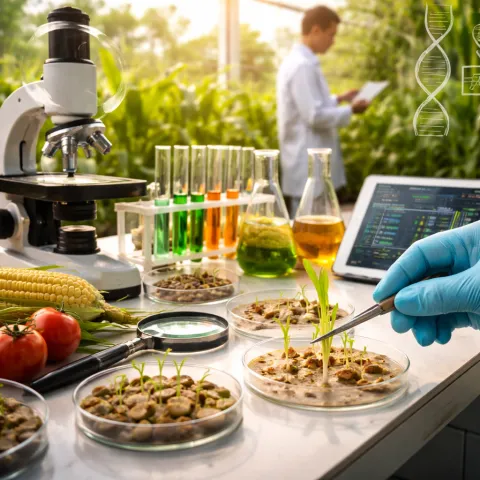
Applied Life Sciences, within Biological Sciences, encompass the practical and translational domains in which biological knowledge is directed toward solving real-world challenges in agriculture, industry, health, and environmental stewardship. This field includes Agricultural Biology, Bioinformatics, and Marine Biology, each representing a bridge between core biological principles and applied technological or ecological objectives. Agricultural Biology focuses on plant and animal productivity, soil–plant interactions, pest and disease management, crop genetics, and sustainable agricultural systems that support global food security. Bioinformatics integrates computational science with molecular biology, enabling the analysis of genomic, proteomic, and metabolic data for research, clinical, and industrial applications. Marine Biology examines the biology of marine organisms and ecosystems, addressing biodiversity, oceanic food webs, climate interactions, and conservation imperatives across coastal and deep-sea environments. Together, these areas form an applied continuum that harnesses biological mechanisms for innovation, environmental resilience, and resource optimization.
Within the methodological framework of the Quantum Dictionary, Applied Life Sciences represent a domain characterized by semantic variability shaped by biological scale, technological application, ecological context, and interdisciplinary integration. Terms such as “productivity,” “resilience,” “annotation,” “adaptation,” or “community structure” collapse into distinct semantic states depending on whether they are invoked in agricultural genomics, computational analysis, marine-ecosystem modeling, or conservation strategy. The quantum-semantic architecture encodes each term as a contextual semantic entity whose meaning resolves according to methodological framework, data modality, ecological environment, or applied objective. This supports interoperability across adjacent domains such as general biology, environmental science, chemistry, engineering, and health sciences, while preserving the definitional precision required for research, regulatory compliance, and technology development. By modeling the dynamic interplay among biological systems, computational tools, ecological processes, and applied objectives, the Quantum Dictionary provides a coherent and adaptive lexicon aligned with the innovation-driven and cross-disciplinary nature of the Applied Life Sciences.