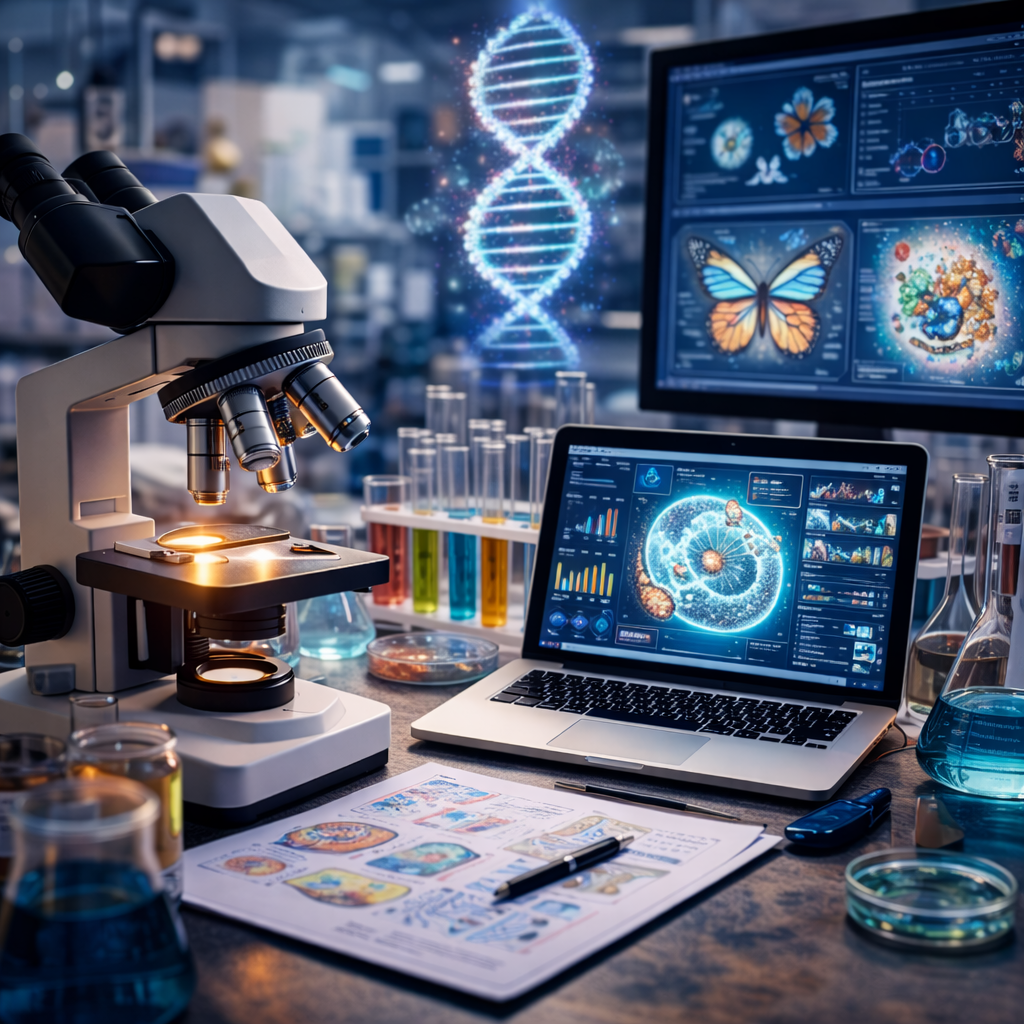
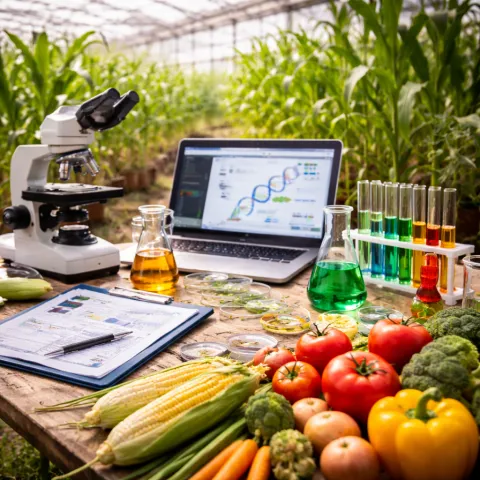
Biological Sciences, situated within the Natural and Formal Sciences hierarchy, constitute a comprehensive domain concerned with the structure, function, evolution, and interrelationships of living organisms and life processes. Within the epistemic framework established by the topical taxonomy, the field encompasses both foundational and highly specialized branches, forming an integrated continuum of life-focused inquiry. General Biology serves as the structural core, housing essential disciplines such as Cell Biology, Evolutionary Biology, and Taxonomy—each contributing to the characterization of organismal form, genetic inheritance, adaptive change, and the systematic ordering of biological diversity. Adjacent to these foundations is a constellation of specialized domains, including Botany, Zoology, Microbiology, Genetics, Molecular Biology, and Biotechnology, which elaborate the mechanisms of life at scales ranging from molecular interactions to ecological systems. The Applied Life Sciences further extend these foundations into domains such as Agricultural Biology, Bioinformatics, and Marine Biology, demonstrating the translational capacity of biological knowledge to address agricultural productivity, computational modeling of biological data, and the dynamics of marine ecosystems.
Within the methodology of the Quantum Dictionary, the Biological Sciences operate as a densely interconnected semantic region whose terms and concepts often maintain context-dependent variability. Biological terminology is inherently polysemous, influenced by methodological advances, evolutionary frameworks, and cross-disciplinary interaction with chemistry, environmental sciences, medicine, and engineering. The platform’s quantum-semantic architecture accommodates these nuances by encoding biological terms as contextual entities whose meanings shift according to scale, disciplinary orientation, and empirical usage. A term such as “fitness,” for example, collapses into distinct interpretive states when invoked in evolutionary theory, molecular genetics, or computational modeling. This structural model ensures that biological terminology remains dynamically anchored to both foundational principles and ongoing scientific discovery, while preserving semantic interoperability across adjacent scientific and applied domains.