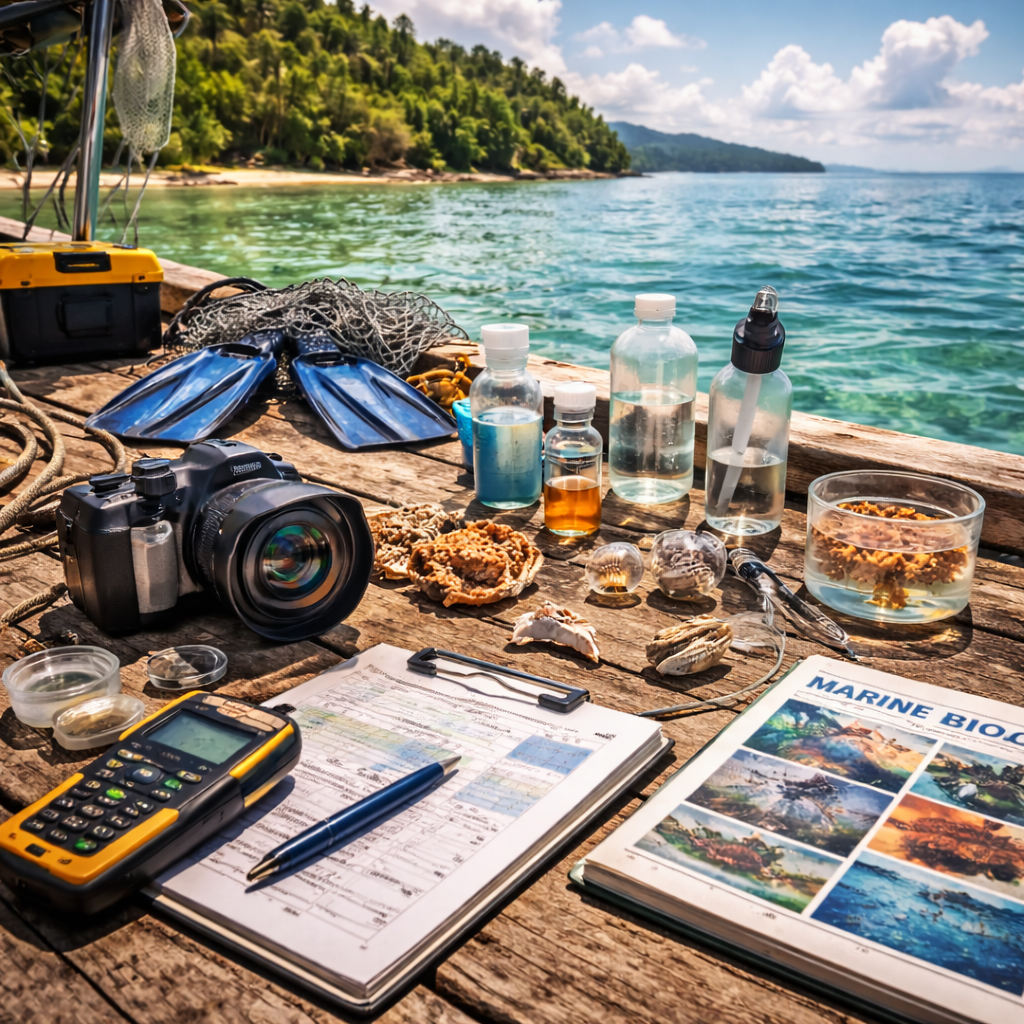
Marine Biology, positioned within Applied Life Sciences, is the study of organisms, populations, and ecological systems in marine environments, including coastal zones, open oceans, deep-sea ecosystems, and estuarine interfaces. It encompasses the biology, physiology, behavior, and evolutionary dynamics of marine species ranging from microorganisms and plankton to fish, marine mammals, and benthic invertebrates. The field integrates oceanographic principles, ecological theory, molecular biology, and environmental science to investigate biodiversity patterns, trophic interactions, life-cycle strategies, and the influence of abiotic factors such as temperature, salinity, pressure, and light availability. Marine Biology also addresses the impacts of anthropogenic stressors - including climate change, pollution, habitat degradation, and overfishing - on marine ecosystems, informing conservation strategies, resource management, and marine-policy development. As a multidisciplinary domain, it bridges biological sciences with oceanography, environmental management, fisheries science, and biotechnology.
Within the methodological framework of the Quantum Dictionary, Marine Biology represents a domain characterized by terminology that varies according to ecological scale, oceanographic conditions, biological classification, and conservation or research objectives. Concepts such as “productivity,” “community structure,” “migration,” “resilience,” or “biodiversity” collapse into distinct semantic states when interpreted in microbial ecology, fisheries biology, molecular ecology, deep-sea biology, or climate-impact assessment. Terminological variation also arises from differences in sampling methodologies, modeling approaches, and regional marine environments, each imposing distinctive interpretive frameworks. The quantum-semantic architecture encodes each term as a contextual semantic entity whose meaning resolves according to ecological context, biological scale, methodological approach, or environmental conditions. This enables semantic interoperability with adjacent domains such as ecology, environmental science, oceanography, conservation biology, and biotechnology while preserving the precision necessary for research, monitoring, and policy guidance. By modeling the dynamic interplay among marine organisms, environmental drivers, ecological processes, and human impacts, the Quantum Dictionary provides a coherent and adaptive lexicon aligned with the complex and evolving nature of Marine Biology.