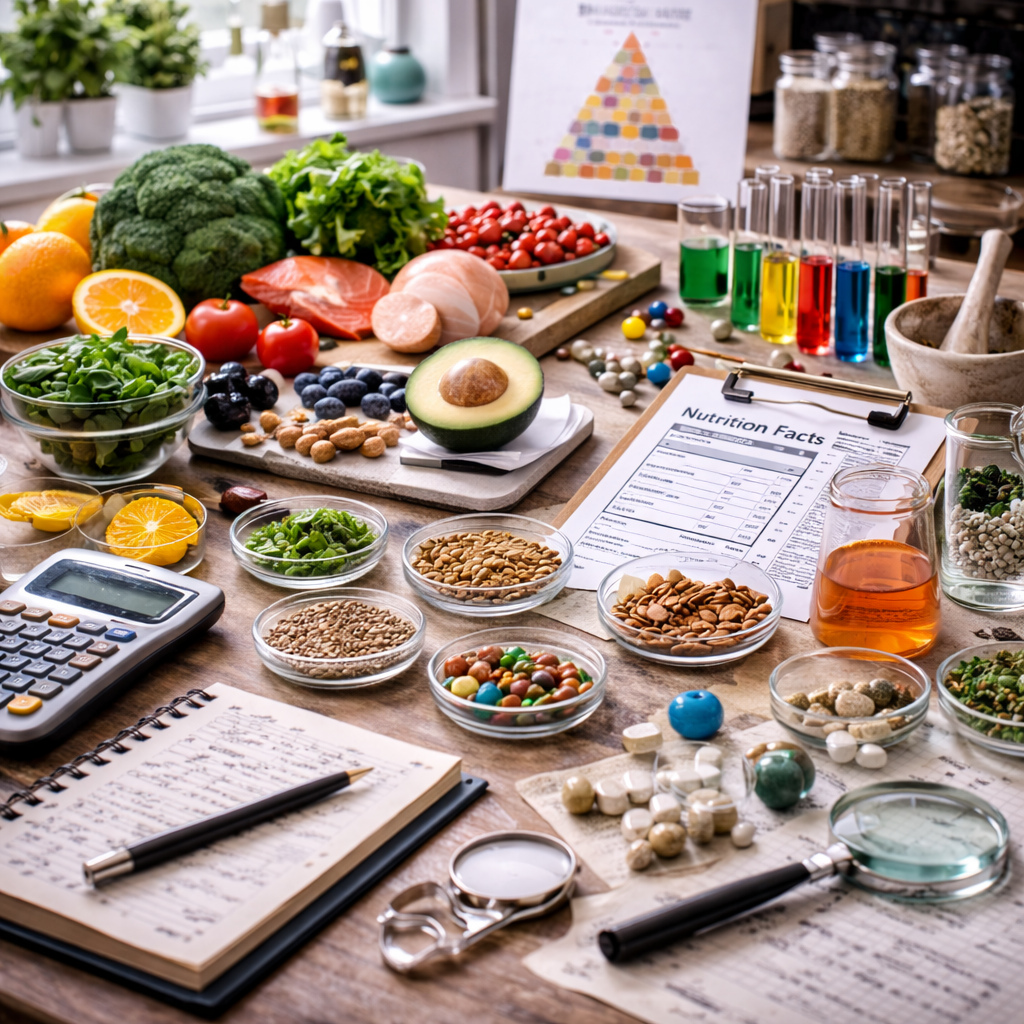
Nutrition & Food Science, situated within Health & Life Sciences, comprise a domain dedicated to understanding the biochemical, physiological, and technological dimensions of food and its relationship to human health. Nutrition focuses on the metabolic roles of macronutrients and micronutrients, dietary patterns, energy balance, nutrient absorption, and the prevention and management of diet-related diseases. It integrates physiological principles, clinical assessment, public-health frameworks, and life-course nutrition to support individual and population well-being. Food Science examines the physical, chemical, biological, and engineering properties of foods, encompassing food chemistry, microbiology, processing, preservation, sensory analysis, and safety standards. This field underpins the development of stable, safe, nutritious, and high-quality food products, employing technologies such as fermentation, thermal processing, packaging science, and quality-control systems. Together, Nutrition & Food Science form a multidisciplinary continuum linking human metabolism, agricultural and industrial food systems, public-health policy, and consumer behavior, thereby supporting global health, food security, and innovation in food production.
Within the methodological structure of the Quantum Dictionary, Nutrition & Food Science represent a domain in which terminology is deeply contextual, spanning clinical care, biochemical analysis, regulatory environments, sensory evaluation, and industrial processing. Terms such as “quality,” “fortification,” “stability,” “bioavailability,” “contamination,” or “nutrient density” manifest distinct semantic states when interpreted through clinical nutrition, food chemistry, microbiological risk assessment, processing technology, or dietary-guideline formulation. Terminological evolution further arises from advances in metabolic research, food-systems engineering, sustainability metrics, and international regulatory standards. The platform’s quantum-semantic architecture encodes each term as a contextual semantic entity whose meaning collapses according to disciplinary perspective, analytical framework, processing stage, or health-policy context. This enables semantic interoperability across adjacent fields—including medicine, public health, agriculture, microbiology, and environmental science—while preserving the definitional precision required for safety, efficacy, and scientific validity. By modeling the interplay among biological processes, food technologies, regulatory governance, and health outcomes, the Quantum Dictionary provides a coherent and adaptive lexicon aligned with the scientific and societal complexity of Nutrition & Food Science.